

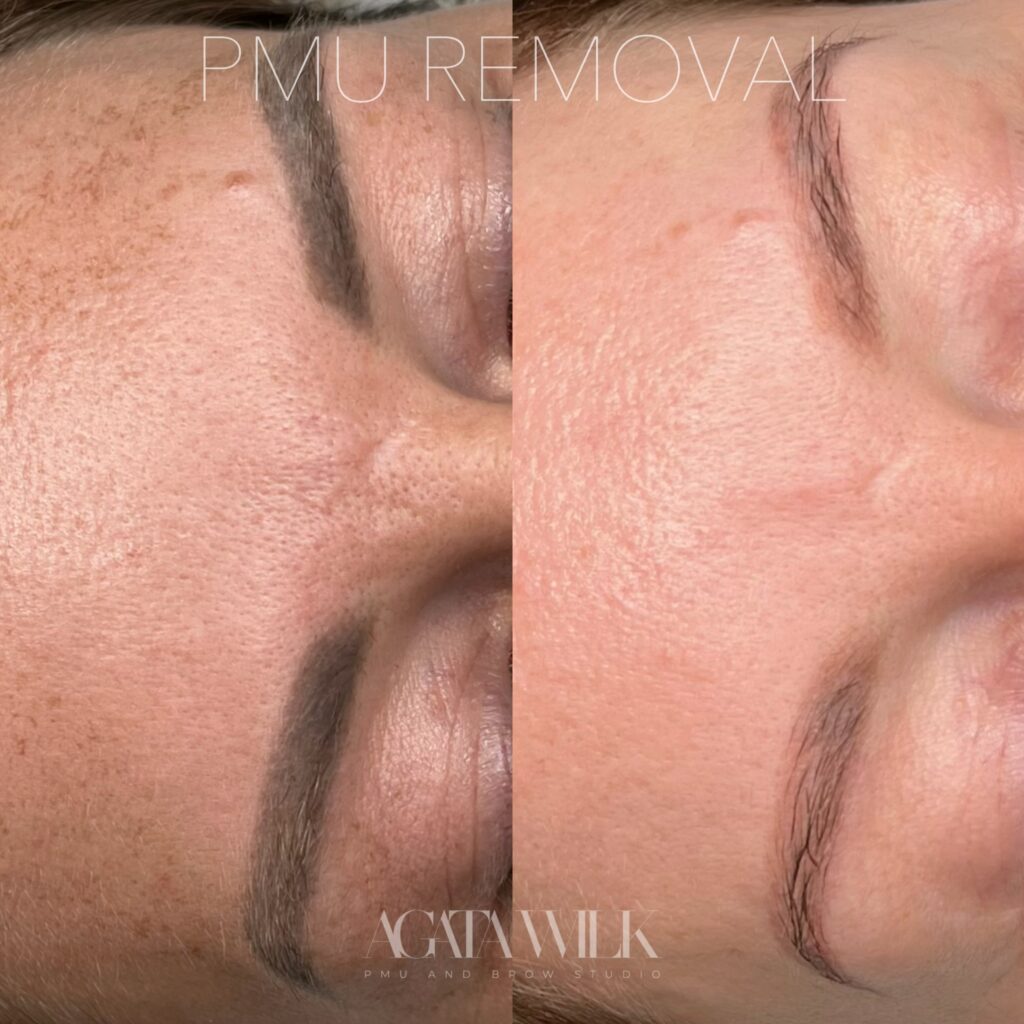
Unhappy with faded, uneven, or botched permanent makeup? In this comprehensive guide, you will discover the core differences between professional laser and saline microblading removal methods, learn what to realistically expect during the skin healing process, and understand how many sessions are needed to safely fade or fully remove unwanted eyebrow tattoos. Don’t panic and avoid risky at-home fixes—read on to explore your options, or book a professional consultation today to discover the safest path to restoring your natural brow look.
Microblading Removal: What are your options?
Microblading can look beautiful when it is fresh, well-shaped and matched to your natural features. But not every result ages the way a client expects. Over time, pigment can fade unevenly, change colour, become too warm or too cool, or simply no longer suit your face.
This is why many people begin searching for microblading removal, eyebrow tattoo removal or permanent makeup removal. Whether your brows are too dark, too thick, uneven, faded grey, orange-toned or simply not your style anymore, professional removal can help lighten or remove unwanted pigment.
The two most common professional options are laser removal and saline removal. Both methods can be highly effective, but they work in different ways. The right choice depends on your skin, the pigment used, how deep the microblading was placed, how old it is and what result you want to achieve.
Is microblading really permanent?
Microblading is often described as semi-permanent makeup, but it is still a form of cosmetic tattooing. During the treatment, pigment is implanted into the skin to create fine, hair-like strokes that mimic natural eyebrow hairs. Because pigment sits below the surface of the skin, it cannot simply be washed, scrubbed or exfoliated away.
For some people, microblading fades softly over time. For others, pigment can last much longer than expected or fade into an unwanted shade. This is especially common when pigment has been implanted too deeply, the skin retains colour strongly, or the original pigment contained a complex mixture of tones.
So, can microblading be removed completely? In many cases, it can be significantly faded or removed, but results vary. Some clients achieve full removal, while others may be left with a faint shadow that can later be corrected, covered or further treated.
Why do people choose microblading removal?
There are many reasons to look for eyebrow tattoo removal or PMU removal. Some people are unhappy immediately after treatment, while others dislike how the shape or colour has changed years later.
Common reasons include:
Brows that are too dark, thick, or asymmetrical.
Pigment that has turned grey, blue, red, pink, or orange.
Old microblading that no longer matches your features.
Botched microblading or heavy oversaturation.
Preparation for a new permanent makeup look.
Emergency microblading removal
If your brows are fresh and you are unhappy, act quickly. Emergency microblading removal is highly time-sensitive and must ideally be done within the first 48 hours. If you are dealing with a botched treatment, reach out immediately via direct message to check your options.
Please note: For older, healed permanent makeup, sending clear, high-quality photos in daylight (one front view and one of each brow) is always required before planning a treatment.
Laser microblading removal: how it works?
Laser microblading removal uses targeted light energy to break pigment particles into smaller fragments, which your body gradually clears over time. It is an excellent option for older, darker, or highly saturated pigment, especially when the goal is to fade the brows enough for a future correction.
However, laser removal is not a one-session solution. Most clients need a progressive course of treatments spaced several weeks apart to let the skin heal. The exact number of sessions depends on the pigment’s depth, density, and colour. Because cosmetic pigments are complex, darker layers may reveal warm red or orange undertones as they fade, making a personal consultation essential.

Exploring saline microblading removal as an alternative
Saline microblading removal is a non-laser method where a specialised, gentle saline solution is worked into the tattooed area. This process draws the pigment up and out of the skin through osmosis.
During the skin healing process, a light scab forms, lifting some pigment away as it naturally sheds. This method is incredibly popular for eyebrow tattoo removal because it targets different pigment colours equally—including stubborn shades that challenge certain lasers. Saline removal is ideal for lifting specific strokes or lightening brows before a shape correction. Like laser, it requires multiple sessions spaced carefully apart.
Saline vs laser microblading removal: Which is better?
Choosing between saline vs laser microblading removal depends entirely on the pigment type, your skin, and your goals. Laser is ideal for dark, dense, or older work, while saline is preferred for multi-coloured pigments, controlled lightening, or targeting specific brow strokes.
During your consultation, I will assess:
The colour and warm/cool undertones of your pigment.
The depth and age of the microblading.
Your skin type, sensitivity, and PMU history.
Sometimes, a combination approach works best—using laser to break down dark density and saline later for remaining warm tones.
How many sessions are needed to remove microblading?
Most clients need more than one session. As a general guide, removal takes several sessions spaced 6–12 weeks apart, depending on how your skin heals. Complete removal can take several months, so be cautious of anyone promising results in just one session.
The course duration depends on pigment depth, total saturation, the age of the brows, and whether previous cover-ups were done.
Can microblading be removed completely?
While microblading can fade dramatically, 100% complete removal cannot be guaranteed. Deeply implanted pigment, multiple layers, or previous correction work will naturally extend your removal journey.
Colour matters too. Darker tones respond well to laser, while red, orange, or grey shades often require a saline approach. However, fading the pigment is usually more than enough to allow for a beautiful, more natural brow correction.
How to fix botched microblading safely?
Adding more pigment to fix bad work too quickly often makes the problem worse, creating darker, thicker brows that are harder to correct later. The safest first step is always a professional assessment to decide whether you need removal, gradual lightening, or a specific correction.
Once enough pigment has been removed, a skilled artist can redesign your brows properly.
Can you remove or fade microblading at home?
Do not attempt at-home microblading removal. DIY methods like salt scrubs, lemon juice, or harsh chemical peels cannot safely reach the dermal layer. Instead, they cause severe irritation and significantly increase the risk of permanent scarring and hyperpigmentation. Trust your skin to a trained professional who understands cosmetic tattoo removal.
Microblading removal healing process
The skin healing process depends on the method chosen. Laser treatments can cause temporary whitening, mild redness, or swelling. Saline treatments form a light scab that must shed naturally—picking it increases the risk of scarring or uneven results. Generally, your skin needs 7 to 14 days to fully heal on the surface, during which the pigment will gradually lift and fade as the skin settles.
Aftercare tips for safe healing after microblading removal
Good microblading removal aftercare is vital. To ensure safe healing and avoid skin damage, you must strictly avoid:
Touching the brows or picking any scabs.
Direct shower water or baths on the treated area for 1 week.
Steam, saunas, and swimming for 4 weeks post-treatment.
Sun exposure and sunbeds for 4 weeks.
Applying makeup directly on the brows until fully healed.
Using strong acids, retinoids, or peels near the area for 4 weeks.
Microblading removal cost
Microblading removal cost varies based on the method used, pigment depth, and total sessions required. A minor shape tweak costs less than a full removal journey. An in-person consultation is the best way to get a realistic treatment plan and an accurate quote.
When should you book a consultation?
Book a professional assessment if your brows are uneven, too dark, or have changed colour. It is especially important if:
Your brows are fresh and you need Emergency removal.
You want a completely new brow design.
You are unsure whether laser or saline suits your case.
FAQ: Microblading removal
It is usually faded using laser microblading removal or saline microblading removal, depending entirely on your skin type, pigment colour, and brow history.
Yes, when performed by a qualified professional using correct technology. Minor temporary risks include redness and swelling, which resolve with proper aftercare.
Not always. Saline is excellent for lifting specific colours (like red or orange) and fresh pigment, while laser is often faster for dark, heavy, or older ink.
Often yes, but it depends on pigment depth and layers. Some clients may retain a very faint shadow, which is ideal for a clean cover-up.
Most people need a progressive course. Light fading might take 2-3 sessions, while full removal of dense work takes longer.